While neither the North American beaver or the European beaver are endangered species, we do have some pretty amazing beaver news to share. The largest beaver dam on our planet is so large, it can be seen from space! The dam, located in Wood Buffalo National Park in Northern Alberta, Canada is 2,790 ft long. That is over twice the length of the Hoover Dam! Read and see more about this amazing construction.
May 27, 2010
World's Largest Beaver Dam Can Be Seen From Space
While neither the North American beaver or the European beaver are endangered species, we do have some pretty amazing beaver news to share. The largest beaver dam on our planet is so large, it can be seen from space! The dam, located in Wood Buffalo National Park in Northern Alberta, Canada is 2,790 ft long. That is over twice the length of the Hoover Dam! Read and see more about this amazing construction.
Labels:
animal nerd fest,
animals,
canada,
ecosystems,
mammals,
National Parks,
news,
rodents
May 26, 2010
A Girl After Our Own (Collective) Heart
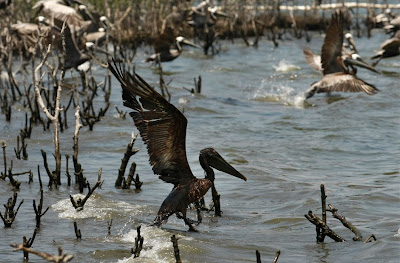
The Sierra Club's Grassroots Scrapbook blog tells the story of 11 year old Olivia Bouler. Distraught over the environmental destruction of the gulf coast oil spill Olivia wanted to sell her drawings of birds to help raise money for the Sierra Club's efforts in the gulf.
The fellow artist-conservationist-fundraiser looks to be as busy as we here at ESPP are. But we hope she still has time for homework (yuck) and having fun. That last bit is important Olivia. Years from now when we retire and you take over management of ESPP you will find you have a lot less free time.
If you donate to one of Olivia's designated conservation organizations her mother will send you one of her drawings. Their project is run through the blog of Olivia's mother who is an eco-friendly architect.
ESPP also appreciated a nice bit of press from the Sierra Club when we were just starting out.
The fellow artist-conservationist-fundraiser looks to be as busy as we here at ESPP are. But we hope she still has time for homework (yuck) and having fun. That last bit is important Olivia. Years from now when we retire and you take over management of ESPP you will find you have a lot less free time.
If you donate to one of Olivia's designated conservation organizations her mother will send you one of her drawings. Their project is run through the blog of Olivia's mother who is an eco-friendly architect.
ESPP also appreciated a nice bit of press from the Sierra Club when we were just starting out.
Labels:
art,
birds,
comrades,
Gulf of Mexico Oil Spill,
news
May 25, 2010
May 24, 2010
Endangered North Atlantic Right Whale born!
Some happy news from the front...A critically endangered North Atlantic Right Whale has been born, and even more amazingly, the event was witnessed by researchers from the University of North Carolina Wilmington.
However, this happy news has a caveat. The waters in which the mother gave birth are just outside the planned site for a major US Navy installation, The Undersea Warfare Training Range, which is planned to be a stunning 500 sq nautical miles in size. Environmenatl groups and scientists agree that this poses an unacceptable risk to Right Whales, and groups like NRDC and the Humane Society have filed suit.
You can read more about the witnessed birth and the suit in the LA Times, here.
(Oh, and not to spill the krill, but you just might be hearing more about the North Atlantic Right Whale and ESPP --- so keep your blowholes above water. Yeah, I typed that.)
May 21, 2010
News From Our Partners: Javan Rhino Poaching
Poaching news From via the International Rhino Foundation:
May 10th Javan Rhino Killed by Poachers
Very sad news - one of the few remaining Javan rhinos in Vietnam was killed by a poacher. Prior to this death, we estimated that only 3 - 5 Javan rhinos survived in Vietnam. We know very little about this small population, and so IRF is currently funding studies to determine the sex ratio and other genetic information ...about the Javan rhinos in Vietnam to help come up with appropriate management plans for these animals.
more
May 21st Poachers killed by Kaziranga Park Guard
Our partners in India have reported that last night, in an encounter in the central range of Kaziranga National Park (home to the world's largest population of Greater one-horned rhinos), four poachers were gunned down by the park guards. One .303 rifle has been recovered from the poachers.
more
May 10th Javan Rhino Killed by Poachers
Very sad news - one of the few remaining Javan rhinos in Vietnam was killed by a poacher. Prior to this death, we estimated that only 3 - 5 Javan rhinos survived in Vietnam. We know very little about this small population, and so IRF is currently funding studies to determine the sex ratio and other genetic information ...about the Javan rhinos in Vietnam to help come up with appropriate management plans for these animals.
more
May 21st Poachers killed by Kaziranga Park Guard
Our partners in India have reported that last night, in an encounter in the central range of Kaziranga National Park (home to the world's largest population of Greater one-horned rhinos), four poachers were gunned down by the park guards. One .303 rifle has been recovered from the poachers.
more
100% of the proceeds of ESPP's (sadly, very) limited edition print of the Javan rhinoceros by Christopher Reiger support the conservation works of the IRF.
Labels:
animals,
Christopher Reiger,
mammals,
news,
News from our Partners,
poaching,
rhinoceros
Thank You
From Printervention, part of this year's Version fest. Printervention asked artists from around the country to create works that raise
awareness of social and political issues. Printervention underscores the necessity for the support of artists and the idea of
civic responsibility to the greater society.
May 12, 2010
Big Cats in the Big City
Panthera New York Times Billboard from Panthera Cats on Vimeo.
For the next 68 days, Panthera’s billboard in Times Square will bring attention to what’s at stake – the world's wild cats could be lost forever. For the remaining days of this campaign, all donations to Panthera will be matched dollar for dollar.
May 10, 2010
Environmental Defense Fund: Gulf Oil Spill Endangers Marine Life and Habitats
EDF scientist Doug Rader, a Ph.D. oceans scientist, discusses the potential impacts of the gulf oil spill on marine life. This is the second installment in a Q&A series with EDF's senior scientists on the gulf oil spill disaster.
May 5, 2010
Pics from ESPP's first show
ESPP prints by Molly Schafer, Matthew Hilshorst, Jenny Kendler,John Vilhauer & Alison Wheeler
Thanks everyone for coming out!
L to R: ESPP prints by Jerstin Crosby (Golden-Crowned Sifaka),Barnaby Whitfield (California Condor), Matt Adrian (Madagascar Fish-Eagle)
& Noah Scalin (The Vaquita - upcoming release)
Here are a few pics from the opening of ESPP's first show, at barbara&barbara gallery in Chicago. You can check out all the pics from the opening (and become our fan!) on ESPP's Facebook page.
Endangered Strangers: The Long-Beaked Echidna

Recently classified as three separate species, long-beaked echidnas belong to an ancient clade of egg-laying mammals that includes the platypus of Australia. They are easily distinguished from short-beaked echidnas by their long snouts, which account for two-thirds of the length of the head. Despite laws designed to protect these species, they are in decline in areas accessible to humans.
Echidnas have lost much of their forest habitat to logging, mining and farming, and are regarded as highly prized game animals by local people, who hunt them with specially trained dogs. One species, Attenborough's long-beaked echidna, is thought to have an extremely restricted range and may be at high risk of extinction.
Thanks to our pals at EDGE for today's Endangered Stranger!
May 3, 2010
New Prints Just Released for May!
April showers bring May flowers...and May condors?

The Dwarf Trout Lily for ESPP by Matthew Hilshorst
Artist Matthew Hilshorst created this delicate "spring ephemeral" flower for ESPP's May release. The Dwarf Trout Lily is not only ESPP's first plant, but it's also our smallest edition to date. Sadly, the Dwarf Trout Lily exists in only 14 populations. You can help protect it with your purchase of the print supporting the excellent work at the Center for Plant Conservation.
The California Condor for ESPP by Barnaby WhitfieldArtist Barnaby Whitfield created this gorgeous (*swoon*) California Condor for ESPP. Barnaby's two-person show with ESPP buddy Aaron Johnson just opened at the fabulous Irvine Contemporary, so if you're in DC, be sure to stop by. With its red, white and blue feathers and stately demeanor, I suggest we kick out the Bald Eagle and adopt Barnaby's Condor as the national bird. Barnaby's Condor print is an edition of only 180, with 100% of the profits supporting the Peregrine Fund's successful California Condor initiative. I know these will be going fast --- so head over to ESPP's website to reserve your print right now!
Labels:
art,
Barnaby Whitfield,
birds,
condor,
ESPP,
ESPP artists,
Matthew Hilshorst,
plants
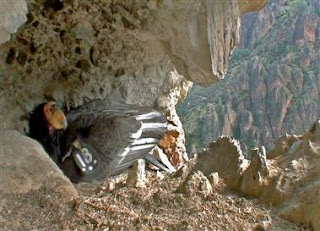
First Condor Born in Pinnacles National Monument in Over a Century!
This
spring, for the first time in over 100 years, a California condor was
born in the wild. Born to parents released from a breeding program in
2004 the condor babe is being cared for in a cave 2,600 feet off the
ground in Pinnacles National Monument. If it's parents are successful
in rearing their newborn, the young condor could take it's first flight
as soon as early October. If this chick survives it will mark a huge
milestone for California condor recovery efforts.
During the early 1800's the California condor occupied mountains along the Pacific coast from British Columbia to northern Baja California. By the 1980's the condor's situation was dismal. The population had declined to less than 20 birds. These remaining birds were captured for captive breeding programs. Today there are 180 California condors in the wild due to the continued efforts of conservationists and captive breeding programs.
In celebration of this joyous occasion ESPP hatched a condor of it's own, courtesy of artist Barnaby Whitfield.
100% of the proceeds from the sale of this print will support California condor restoration.
You can view images of the Pinnacles condors on the park's Condor Cam.
Condor nesting it's egg at Pinnacles
Image: John Maio/ National Park
Service
During the early 1800's the California condor occupied mountains along the Pacific coast from British Columbia to northern Baja California. By the 1980's the condor's situation was dismal. The population had declined to less than 20 birds. These remaining birds were captured for captive breeding programs. Today there are 180 California condors in the wild due to the continued efforts of conservationists and captive breeding programs.
In celebration of this joyous occasion ESPP hatched a condor of it's own, courtesy of artist Barnaby Whitfield.
100% of the proceeds from the sale of this print will support California condor restoration.
You can view images of the Pinnacles condors on the park's Condor Cam.
Labels:
animals,
Barnaby Whitfield,
birds,
condor,
news
Subscribe to:
Posts (Atom)